Why Bother Tracking Your Net Worth? The Case for the One Number That Matters
You know what net worth is. Here's why watching it — month after month — quietly changes how you make every financial decision.
Most people can tell you their salary to the last cent and have no idea what they're actually worth. That's backwards. Income is a speedometer — it tells you how fast money is moving through your hands right now. Net worth is the odometer — it tells you how far you've actually gone. You can drive fast for years and still not get anywhere.
If you already know how to calculate your net worth, this post is about the part nobody explains: why it's worth watching at all.
A single number replaces a dozen vague worries
"Am I doing okay?" is an exhausting question because it has no answer. It splits into a dozen smaller ones — Is my saving enough? Is that debt a problem? Did this year go anywhere? — and none of them resolve on their own.
Net worth collapses all of that into one figure. It doesn't tell you everything, but it tells you the one thing the anxious questions are circling: are you, on balance, moving forward or not.
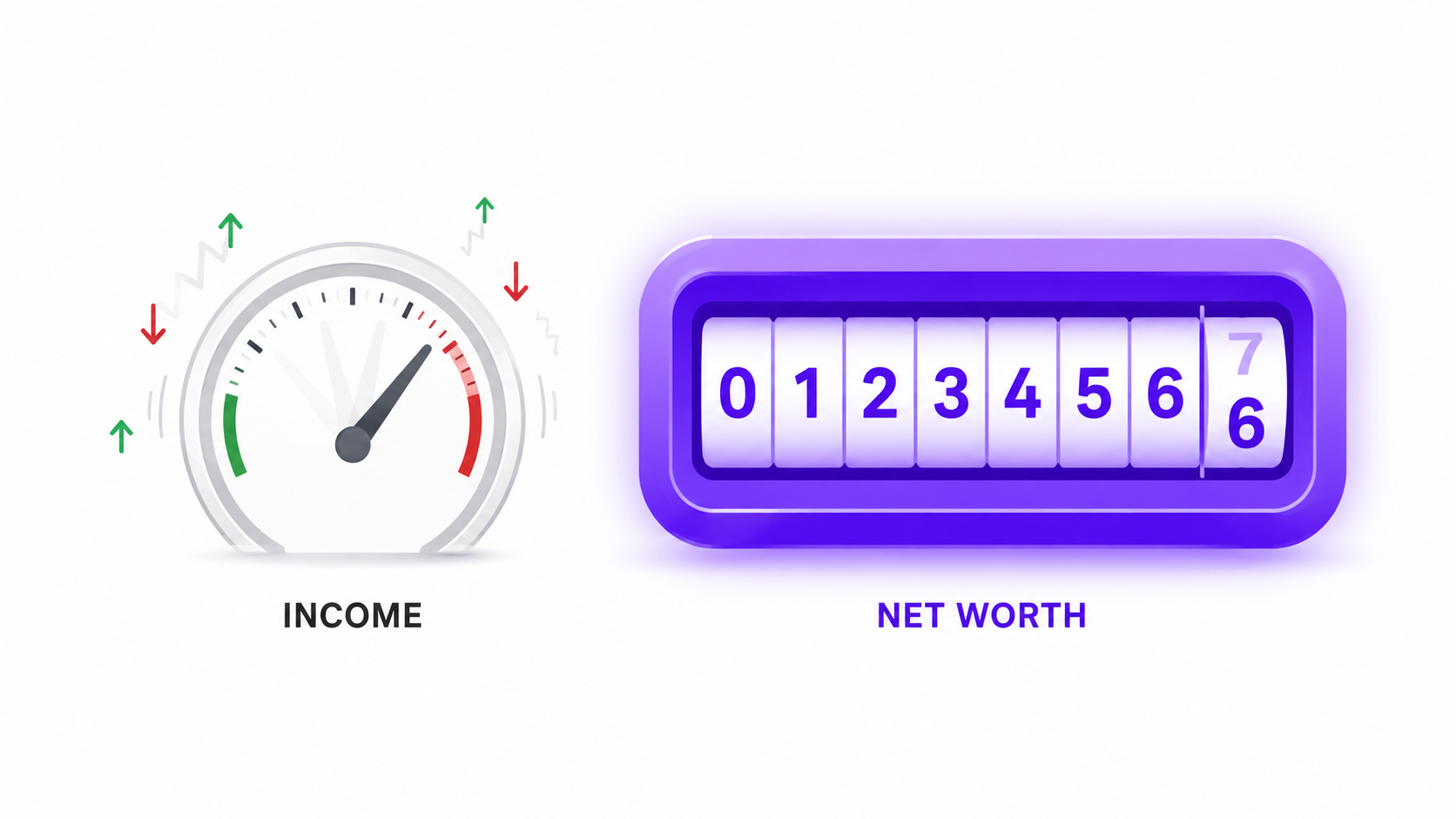
Example: income tells you your speed; net worth tells you the distance actually covered.
The trend matters more than the number
A single net-worth figure is a fact. A net-worth figure tracked month over month is a story — and the story is where all the value lives.
One number tells you where you are. A line tells you where you're going.
The absolute figure is almost a distraction. What you actually want to read is the direction:
- Rising steadily — whatever you're doing is working. Keep going.
- Flat despite a good income — lifestyle creep is quietly eating your raises.
- Recovering after a dip — a setback is turning around, and you can see it.
None of those are visible in a bank balance on any given day. They only appear when you line the months up next to each other.
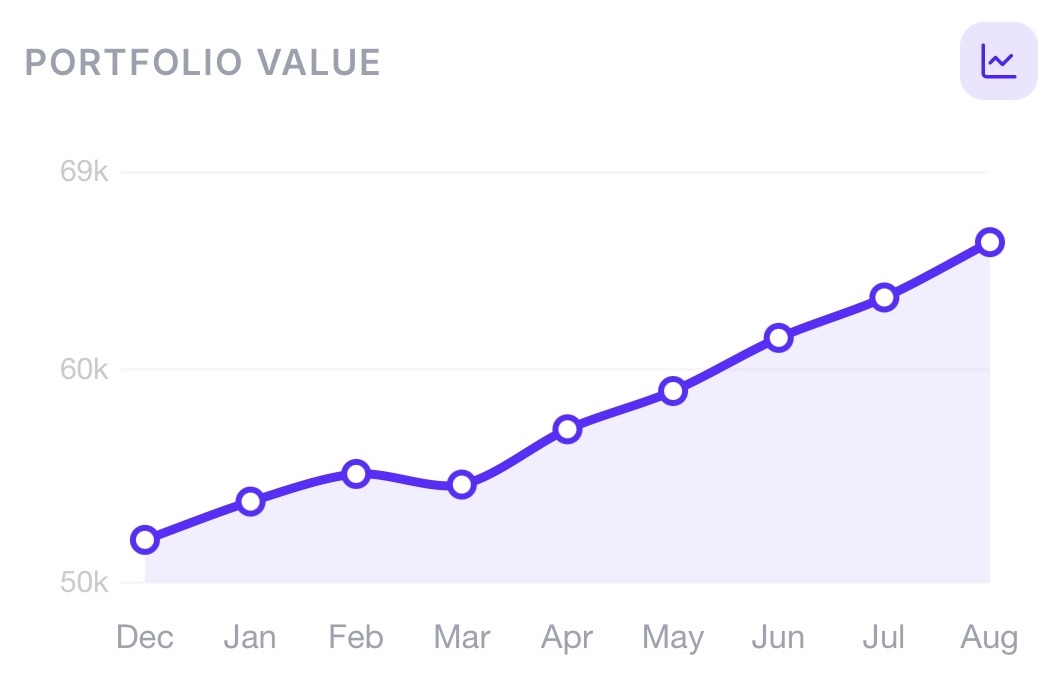
Example: the shape of the line — not any single point — is what tells you the story.
The decisions it quietly unlocks
Watching the trend isn't navel-gazing. It changes concrete choices:
- When you can take a risk. A visible cushion — and a line that's been climbing — is what makes it reasonable to change jobs, start something, or take the trip. Guessing makes you cautious; seeing makes you confident.
- Whether lifestyle creep is winning. A rising salary with a flat net worth is the single most common quiet trap in personal finance. The trend line is the only place it shows up early enough to fix.
- Whether you're actually recovering. After a big expense or a rough stretch, the reassurance that "things are turning around" is just a feeling — until the curve confirms it.
"Isn't this just vanity?"
No — and this is worth being clear about. Net worth isn't a scoreboard or a measure of your worth as a person. It's a diagnostic, like a bathroom scale or a fuel gauge. A negative number early in a career is completely normal. A number that's smaller than a friend's is irrelevant. The only comparison that means anything is you, last month.
Read as judgment, it's just stress. Read as information, it's a compass.
Why the cadence is the hard part
Here's the catch: the value of net worth comes entirely from tracking it regularly, and regular tracking by hand is exactly what nobody keeps up. You do it once in a burst of motivation, then never again — so you're left with a single stale number, which is the one form of net worth that isn't very useful.
This is the whole reason Recipro captures a monthly snapshot of your net worth automatically. You keep your balances roughly current; Recipro turns them into the trend line without you having to remember to do anything. The cadence — the part that actually makes net worth worth tracking — is handled for you.
If you haven't set it up yet, the step-by-step guide walks through adding what you own and owe. And once the trend is running, the Chill Calculator turns that same net worth into an even more reassuring number: how long you could stop working entirely.
You already track your income without thinking about it. Net worth takes far less effort and tells you something income never can: not how fast you're going, but whether you're actually getting somewhere. Set the snapshot running once, and the answer is simply there whenever you want it.