You Don't Need to Track Every Coffee: The Case for Big-Picture Finances
Logging every latte and splitting your salary into a dozen budget envelopes isn't the only way to be financially healthy. For a lot of people, watching the trend is enough.
Open almost any personal-finance app and the message is the same: categorize everything. Tag the €10 bakery run, split your income into envelopes for groceries and leisure and transport, and reconcile it all at the end of the week. For some people that structure is genuinely helpful. For a lot of others, it's a chore they abandon by the second month — and then feel guilty about.
Here's the thing nobody says out loud: micro-managing every expense is a strategy, not a requirement. It's one way to stay on top of your money. It isn't the only one.
Two ways to watch your money
There are really two altitudes you can watch your finances from:
| Approach | You track… | The question it answers |
|---|---|---|
| Micro | every transaction, by category | "Where did each euro go?" |
| Big-picture | your net worth over time | "Am I moving in the right direction?" |
Neither is correct. They answer different questions. Budgeting to the cent is powerful when you're trying to find leaks, dig out of debt, or build a spending habit from scratch. But if your spending is already reasonable, tracking every line item is a lot of effort to confirm something you basically already know.
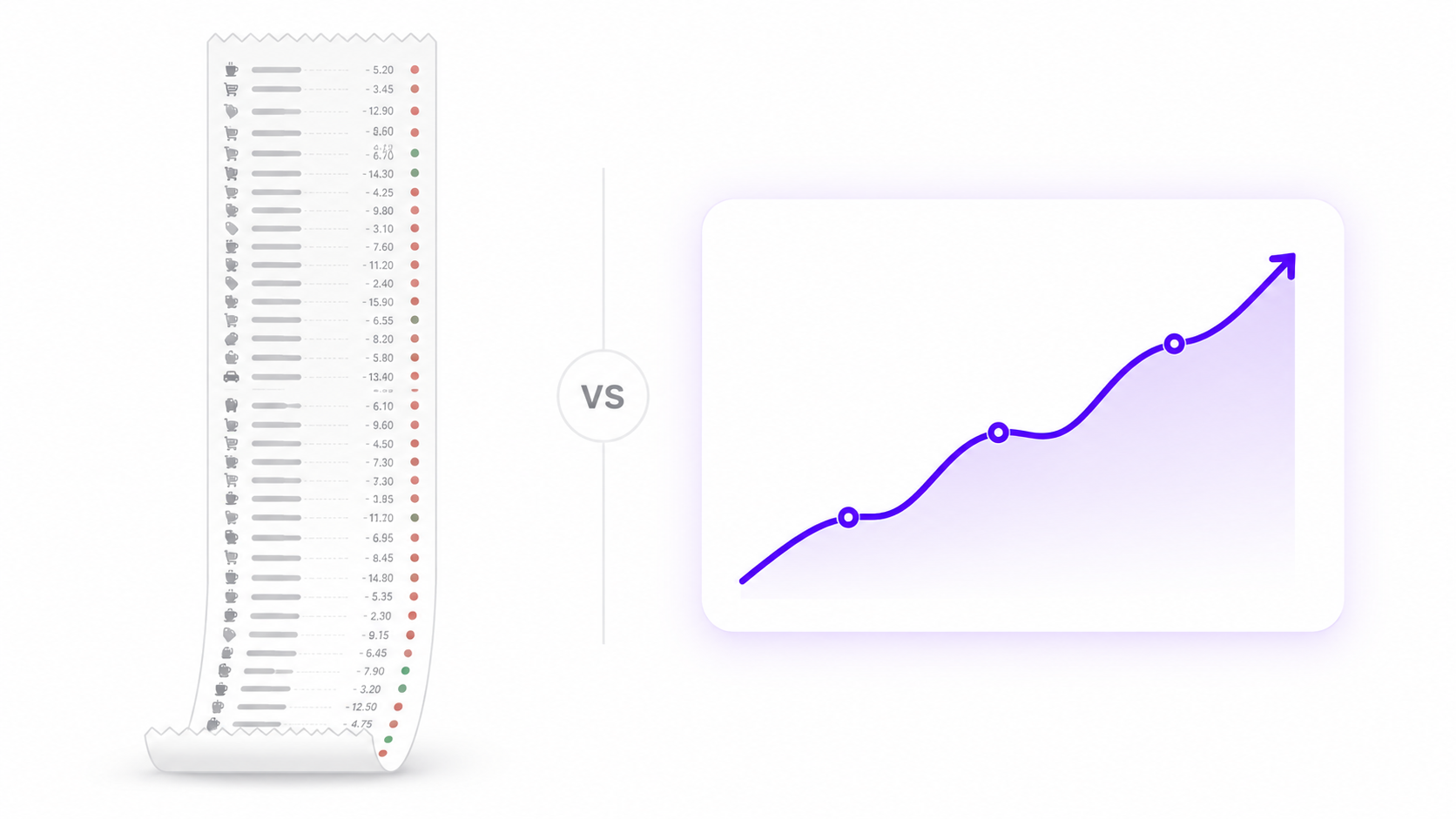
Example: the same month, seen as a hundred tagged transactions or as one line moving up.
Micro-managing burns a lot of people out
Detailed expense tracking asks for a small bit of discipline every single day — and daily discipline is exactly the kind that quietly lapses. You miss a few days, the categories drift out of date, the numbers stop being trustworthy, and the whole thing starts to feel like homework you're behind on.
The best system isn't the most detailed one. It's the one you'll still be using in a year.
For plenty of financially healthy people, the granular approach fails not because they're careless, but because the effort is out of proportion to what they get back. They already know roughly what they spend. What they actually want to know is whether it's working.
The big-picture alternative
If your habits are already decent, you don't need to interrogate every purchase. You need one honest answer, on a calm cadence:
"How did I do this month?"
That's it. A single number — my net worth grew 2% this month — tells a well-behaved spender almost everything they need. It quietly confirms the important things at once: you spent less than you earned, your investments did their job, and you're heading the right way. No envelopes, no receipts, no daily logging.
And when a month is off, the trend surfaces it without you having to hunt. A flat or negative month is the signal to go look — and it's a far rarer, lower-stress event than reconciling a spreadsheet every week.
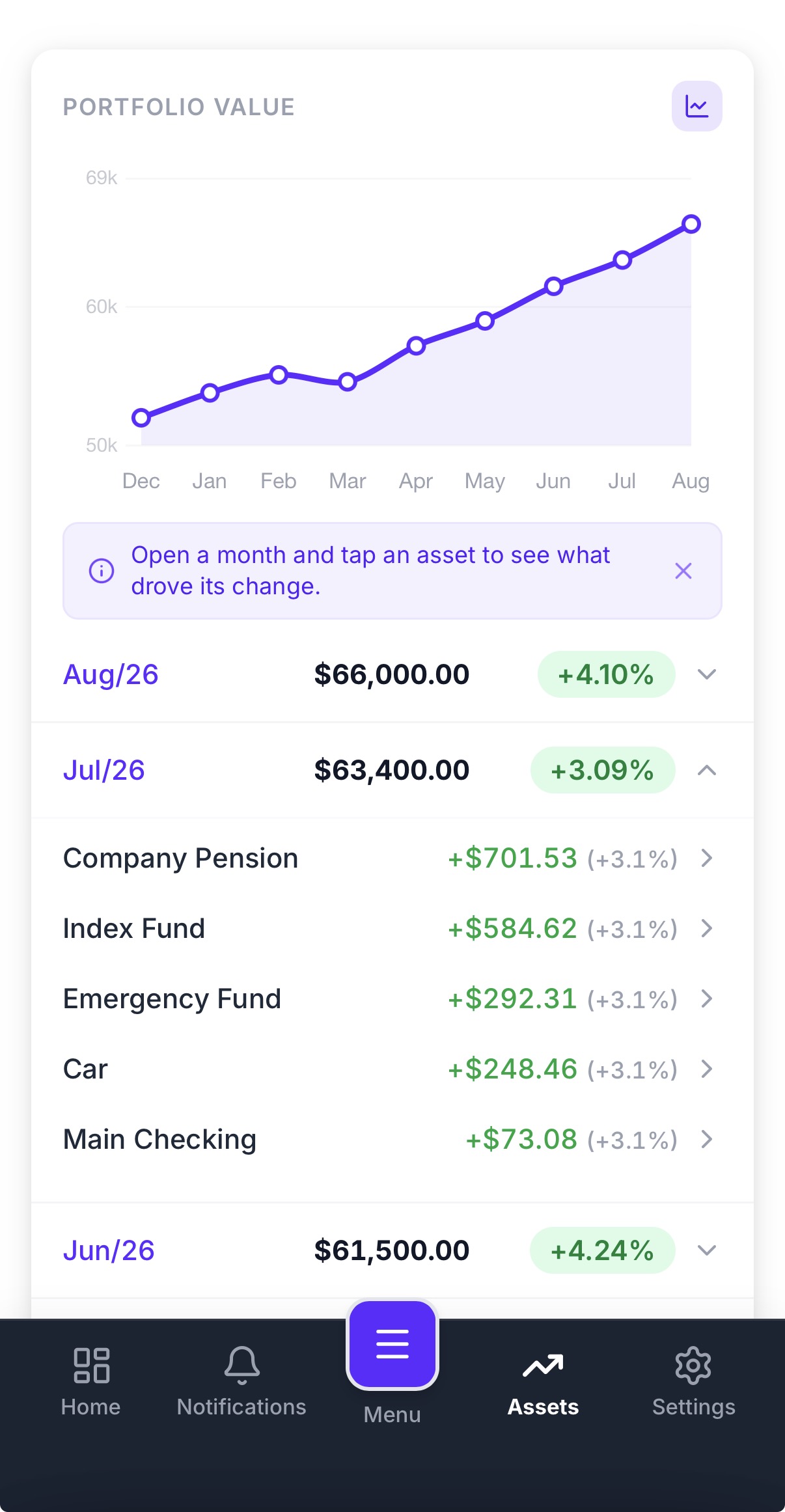
Example: "+2% this month" — the one number that tells a healthy spender they're on track.
This isn't being careless — it's being done
It's worth being clear: choosing the big-picture view isn't financial avoidance. It's the opposite. It's what you graduate to after you've internalized good habits — when you no longer need a system to police your spending because your spending polices itself. At that point, tagging every coffee isn't discipline; it's just friction.
If you're still building those habits, detailed budgeting is a great teacher, and you should use it. But if you're past that stage, you're allowed to put the spreadsheet down and simply watch the outcome.
How Recipro fits this exactly
Recipro is built for the big-picture crowd. It doesn't ask you to log every transaction or sort your life into budget categories. You keep your assets and balances roughly current, and it does the rest:
- It captures a monthly snapshot of your net worth automatically — so a history builds itself without any daily input from you.
- It shows how you did, as a percentage. Each month gets a simple net-worth change — +2%, −1% — the one number a healthy spender actually wants.
- It plots the trend. A Portfolio Value chart turns those months into a line, so "am I heading the right way?" becomes something you glance at, not calculate.
- When a month looks off, it can tell you why. A per-asset breakdown shows whether a dip came from a market move or the exchange rate — without you having logged a single expense.
- It nudges you occasionally, not constantly. A gentle reminder to check how your net worth moved this month — not a daily prompt to categorize your lunch.
The whole design assumes you have better things to do than reconcile receipts.
If the trend is new to you, the guide to calculating your net worth covers the one-time setup, and why tracking net worth matters makes the case for watching the direction over time.
Micro-managing every expense is a fine strategy — for the people it suits, at the stage where it helps. But it was never the price of admission to being good with money. If you already know your spending is under control, you're allowed to skip the daily bookkeeping and just watch the one number that summarizes it all: whether, month over month, you're growing.