Share a Ledger: Let People See What They Owe — No Account, No Awkward Reminders
The hard part of lending isn't the money — it's bringing it up. A shared, read-only balance removes the need to mention it at all.
If you've ever kept a running balance of money you lent to a friend, you know the system works right up until the uncomfortable moment: actually bringing it up. Reminding someone what they owe feels like nagging, so you put it off, and the ambiguity creeps back in.
There's a simple fix that removes the awkward conversation entirely: let them see the balance themselves.
The core idea: a read-only link
In Recipro, any ledger can become a public, read-only link. You flip one toggle, get a URL, and send it to the person you lent to — over text, chat, email, however you already talk.
That's the whole move. No invitation to accept, no shared account to set up.
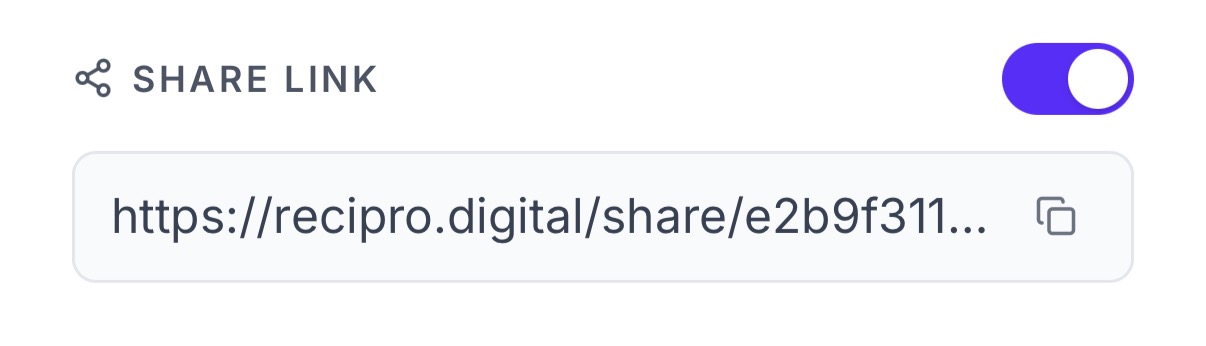
Example: one toggle turns a private ledger into a shareable, read-only link.
What the other person sees
They open the link and see a clean, branded page with exactly what you see: the entries, the running balance, and the current status. Nothing more.
- No Recipro account required. They don't sign up for anything.
- No app to install. It opens in any browser.
- Nothing they can change. The page is strictly view-only — they can read the numbers but can't edit an entry, add a payment, or alter the balance.
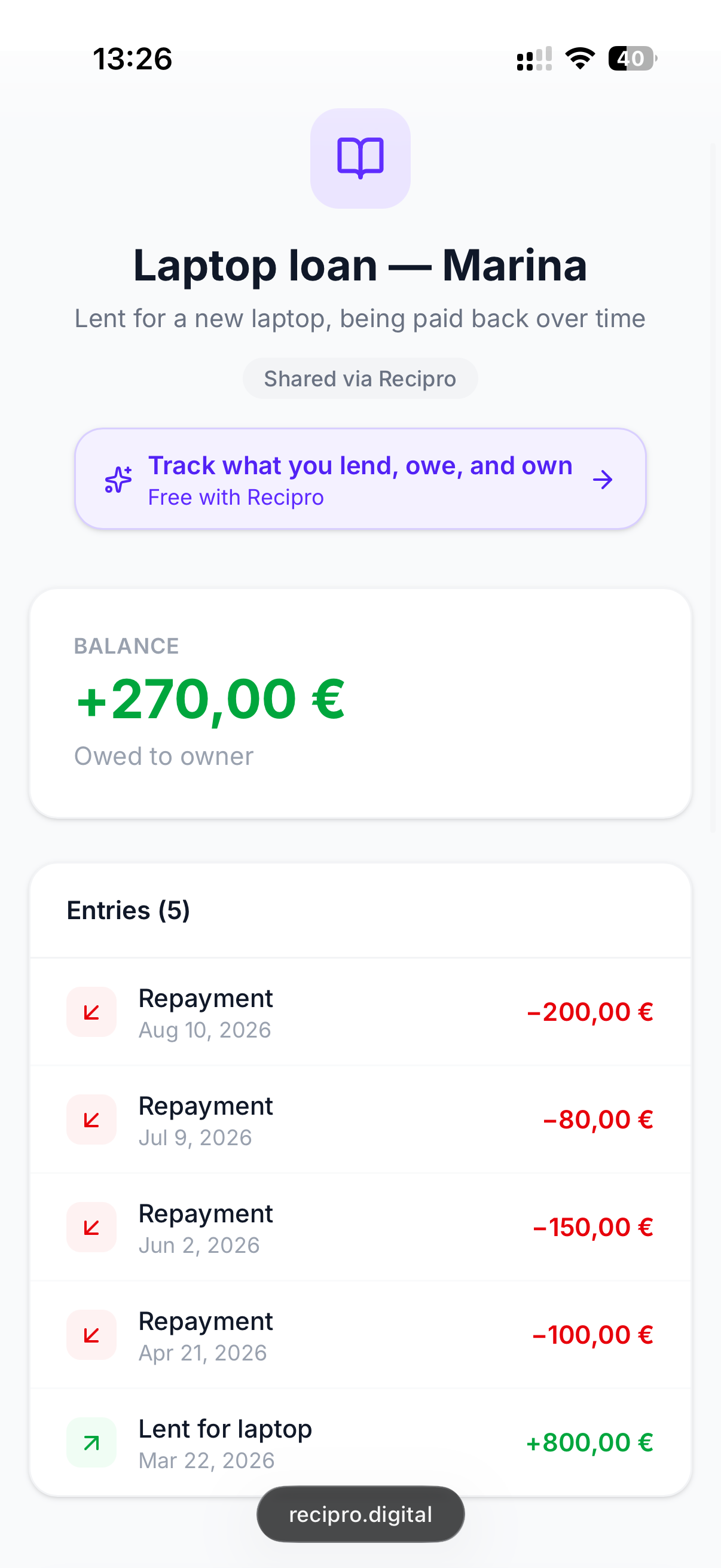
Example: the recipient sees the same entries and running balance — with nothing to edit.
Why "read-only and revocable" is the whole point
Sharing money numbers with someone naturally raises two worries. Recipro's design answers both:
You keep the pen. They only get to read.
- They can't tamper with it. Because the link is view-only, the balance stays your record. There's no risk of the other side "correcting" a number.
- You can switch it off anytime. Turn the link off and it stops working immediately — the next time anyone opens it, they just get a "not found" page. Access is yours to grant and yours to revoke.
This is what makes sharing comfortable rather than nerve-wracking: you're not handing over control, just visibility.
Private by design
A link anyone could open sounds like it might leak. It doesn't, and it's worth knowing why so you can share with confidence:
- It won't show up in search. Shared pages are marked so search engines don't index them — the link only works if you send it to someone.
- The address can't be guessed. Each link uses a long, random token, so nobody stumbles onto your ledger by trying URLs.
- Only the essentials travel. The public page shows the ledger's entries and balance — internal account details are stripped out before anything is sent.
You don't need to think about any of that day to day. It just means "share this link" is a safe thing to do.
When to share (and when not to)
Sharing shines when both sides benefit from the same source of truth:
- A long-term loan to family — they can check the balance whenever, without asking you.
- A shared trip or group cost — everyone sees the same running total.
- Any IOU you'd rather not have to remind someone about — the number is simply there.
For a purely private note-to-self, just leave the link off. Sharing is opt-in, one ledger at a time.
How to share a ledger
- Open the ledger you want to share.
- Turn on the share link. One toggle generates a private, read-only URL.
- Send it to the person however you normally talk to them — no account needed on their end.
- They open it and see the live entries and balance, always up to date.
- Revoke anytime. Switch the toggle off and the link stops working instantly.
Lending to people you care about shouldn't come with a side of awkward reminders. Keep one honest running balance, share it as a read-only link, and the numbers speak for themselves — so you never have to. If you're just getting started with tracking informal loans, the guide to money you lend to friends and family covers the habit that makes all of this work.