Your Money Crosses Borders. Your Net Worth Should Keep Up.
If you hold more than one currency, a single-currency spreadsheet quietly lies to you. Here's how to see one honest total — and why history is the tricky part.
More people than ever hold money in more than one currency. Expats and immigrants keep accounts in two countries. Remote workers get paid in dollars and spend in something else. Families send money across borders. Travelers leave a little behind everywhere they go. If that's you, a single-currency spreadsheet isn't just inconvenient — it's quietly wrong, every single day.
The problem with "just convert everything"
The obvious fix is to convert every balance to one currency and add it up. That works for a snapshot, but it breaks the moment you try to track change over time.
Here's why. Say you hold €10,000 and you view everything in euros. If the app stores that as dollars behind the scenes and converts back to euros to show you, your €10,000 makes a round trip — euros to dollars and back. Because the exchange rate moves between those two moments, the number that comes back isn't quite €10,000 anymore. You didn't touch the money, but it looks like it changed.
An asset you never touched should never appear to change value. If it does, your tracker is measuring the exchange rate, not your wealth.
Do that across a whole portfolio, every month, and your history becomes noise: past months drift every time the currency market moves.
What "done right" looks like
A tracker that handles currencies honestly follows two rules:
- Every item keeps its own native currency. Your euro account is stored in euros, your dollar account in dollars. Nothing is silently converted at rest.
- Conversion happens only for display. You pick the currency you think in, and totals are converted to it on the way to your screen — never round-tripped through a hidden base.
The payoff: an asset held in your display currency shows exactly what you entered, forever. No drift, no phantom changes.
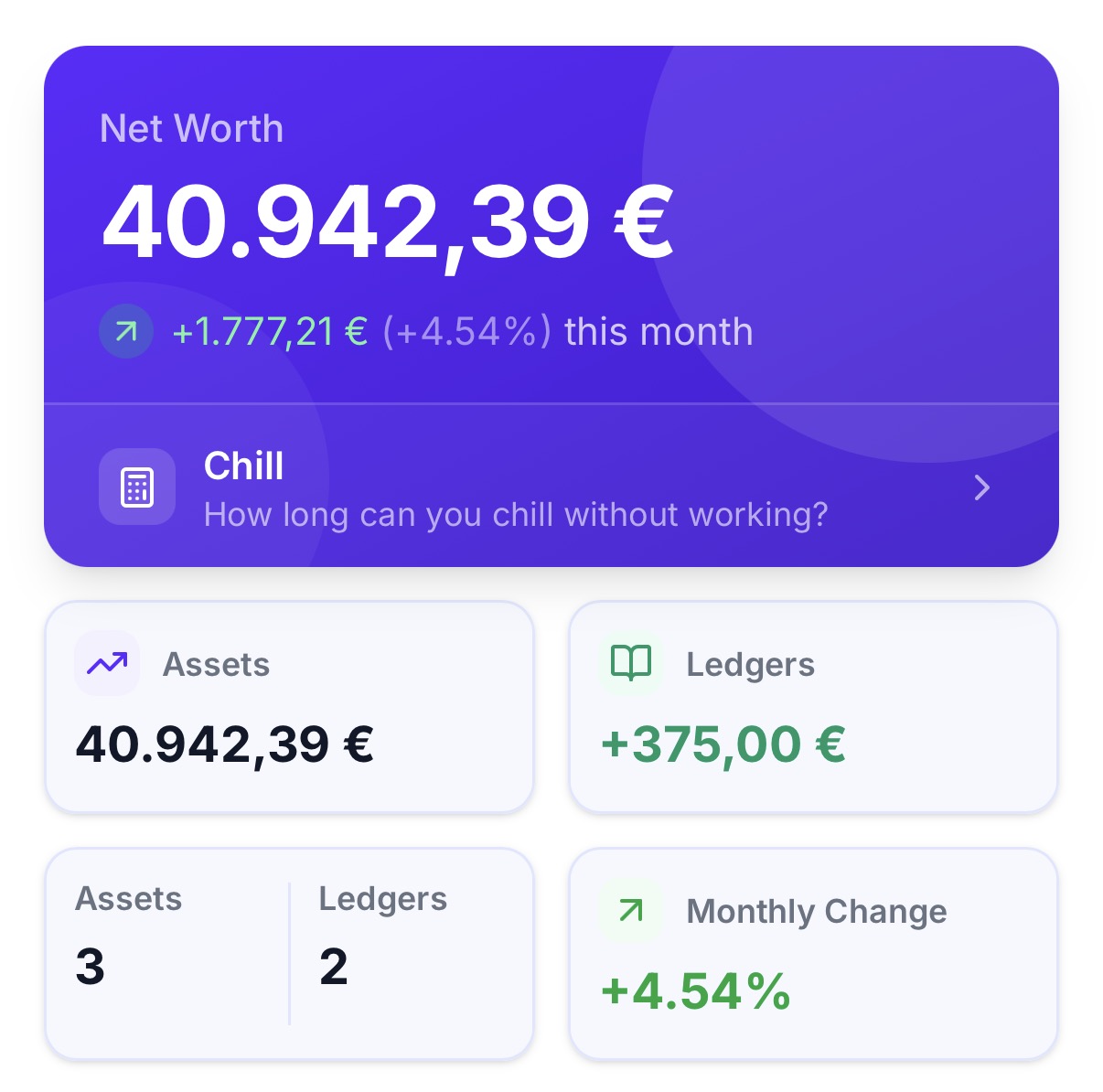
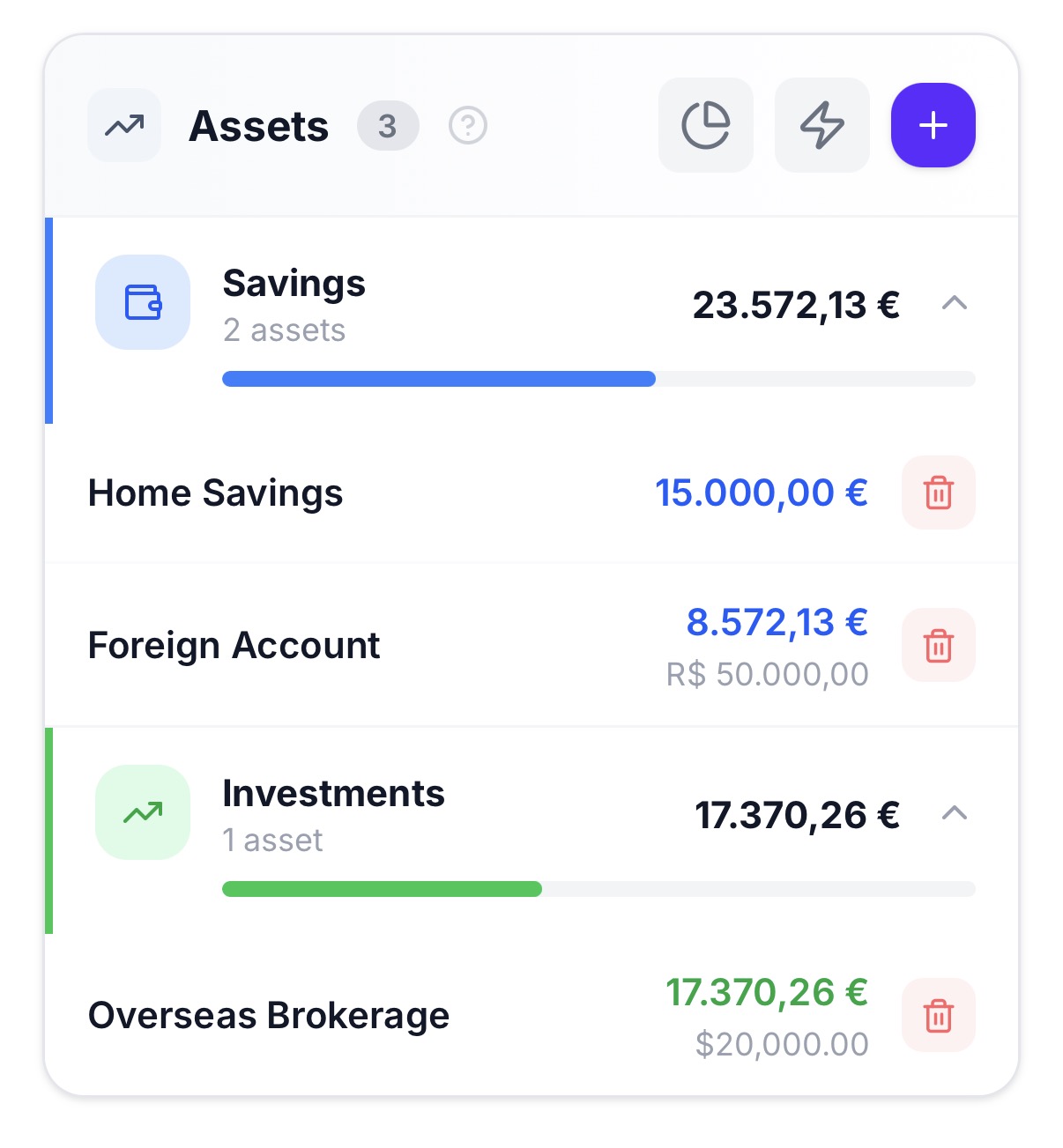
Example: euros, dollars, and reais held side by side, converted into one net-worth total.
History needs frozen rates
There's one more subtlety. To value last month correctly, you can't use today's exchange rate — that would rewrite the past every time rates move. The right approach is to capture the exchange rates at the end of each month and freeze them, then value each month with the rates that actually applied back then.
That's exactly what Recipro does. It archives a month-end snapshot of exchange rates, so:
- Same-currency holdings show precisely what you entered, in every month.
- Cross-currency holdings are valued at each month's own frozen rate, so past months stay stable instead of shifting under you.
- Only the current, in-progress month uses the live rate — because its month-end snapshot doesn't exist yet.
Seeing why a number moved
Once history is stable, a genuinely useful question becomes answerable: when a cross-currency asset changes value month to month, was it the asset that moved or the exchange rate?
Recipro separates the two. For each asset it can split a monthly change into the part driven by the underlying value (a stock price, a balance, the native amount) and the part driven purely by the currency moving. So a "my portfolio dropped" month reveals whether you actually lost anything or the euro just had a weak week.
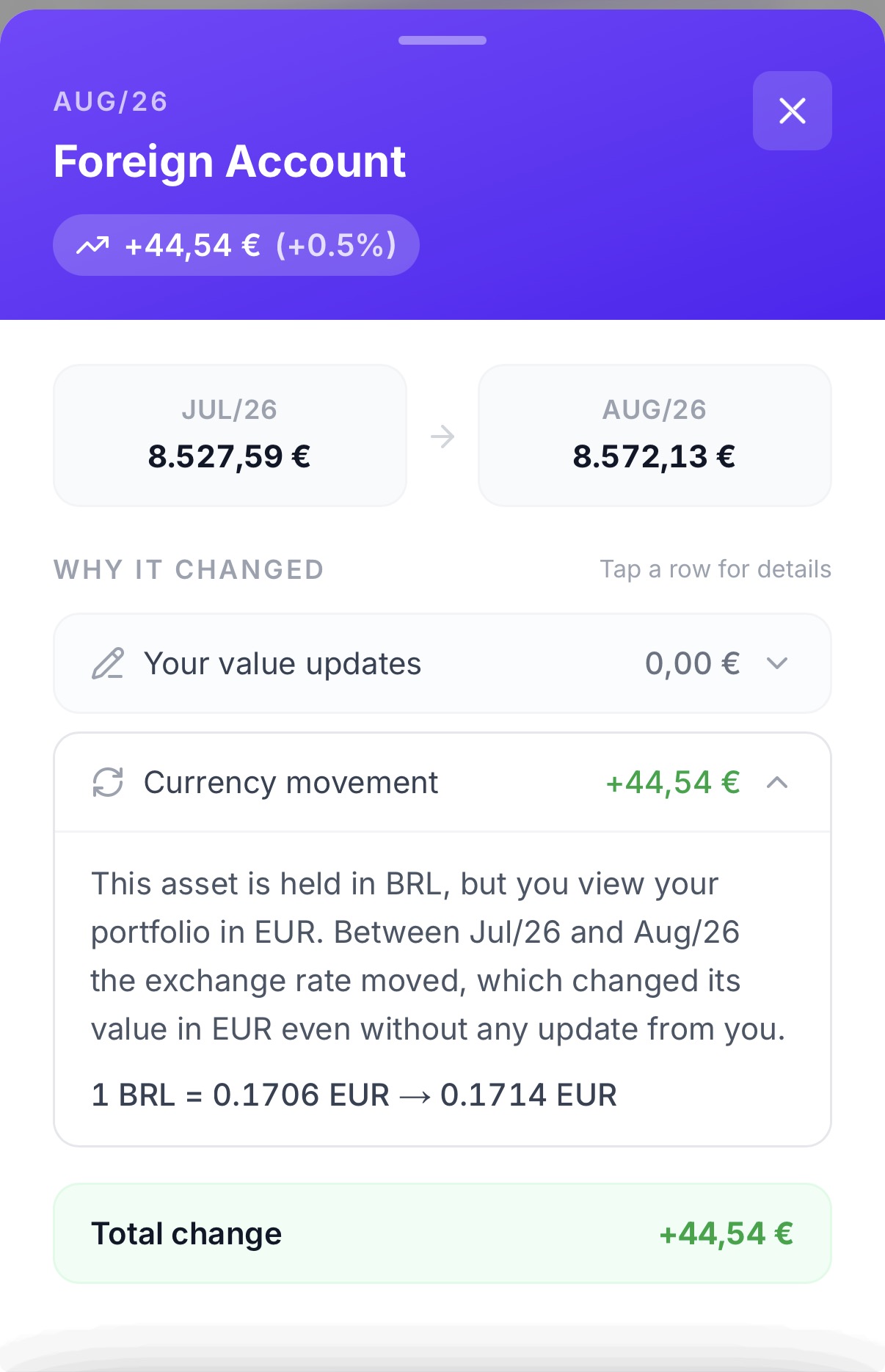
Example: Recipro shows how much of a change came from the asset itself versus the exchange rate.
How to set it up in Recipro
- Set your home currency. On the Settings page, choose the currency you think in. Every total across the app converts to it.
- Add each asset in its own currency. A euro account stays in euros, a dollar account in dollars — you don't pre-convert anything.
- Record cross-border ledgers as they are. Money lent or owed keeps its own currency too, and still rolls into your single net-worth total.
- Read one honest total. Your dashboard shows everything converted to your home currency, with up-to-date rates.
- Watch stable history build. Each month is frozen at its own rates, so your trend reflects your wealth — not the day's exchange market.
If your life spans currencies, your net worth should too — without lying to you about it. Keep each asset in its own currency, view the total in the one you think in, and let month-end rates keep your history honest. It's the difference between a number you can trust and one that quietly drifts every time the market opens.